

There comes a point near the end of every season when I find myself thinking, Already?
I just got used to this.
It happens to me in ways that seem almost too small to matter. The clothes I’m wearing. What I carry in my pockets. When darkness falls. Where I spend a little time outside. Whether I’m sitting comfortably watching the world go by or trying to get out of the rain. None of these things sounds particularly profound on its own.
Yet somewhere among all those little things, I feel the loss of a season.
I wouldn’t describe it as some enormous struggle. It isn’t. There is a little irritation, perhaps some sadness, and something I can only describe as a small kind of grief. I notice it. I acknowledge it. I know what is happening.
And then the seasons change anyway.
Maybe that’s what makes me curious about it. Why should something so predictable affect us at all? We’ve done this before. Spring becomes summer, summer becomes fall, fall becomes winter, and eventually we circle back again. We know it’s coming.
So why can it still be difficult to let a season go?
Maybe We Aren’t Just Letting Go of Weather
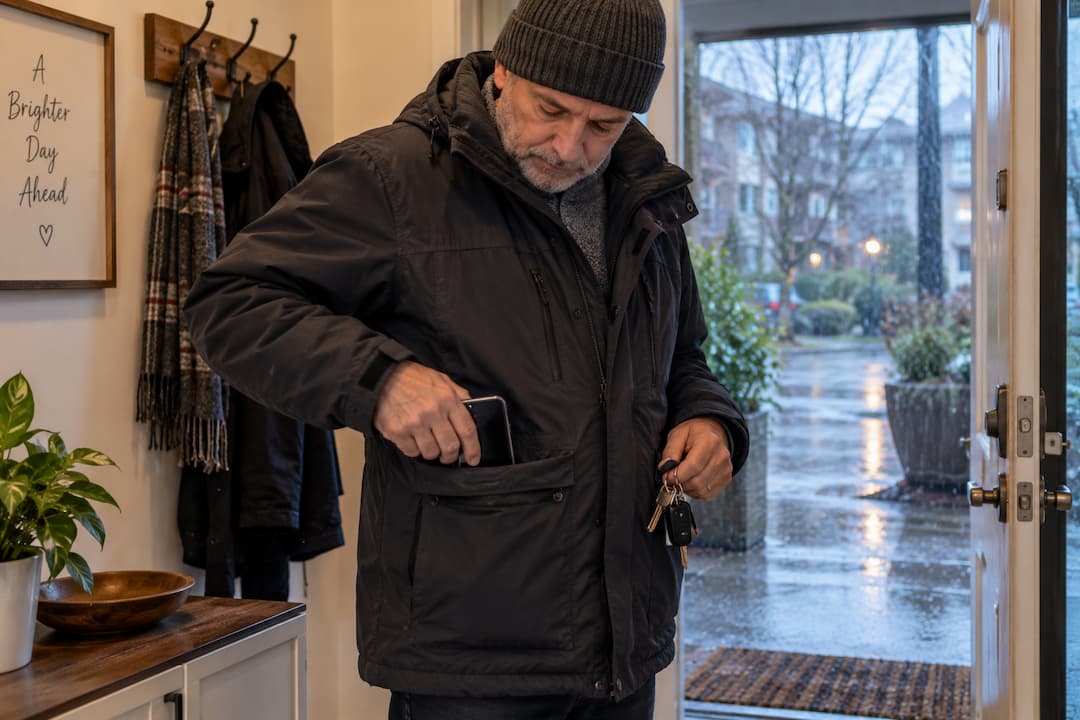
Here in Vancouver, the colder months gradually create their own rhythm for me. I’m wearing long pants and a coat when I leave home. That coat comes with something remarkably useful that I don’t appreciate nearly enough until spring arrives: pockets.
On a workday I have my personal phone, a work phone and my keys. In colder weather, everything has a place. I put on my coat, put everything in my pockets and go.
There’s a coziness to the whole thing too.
The days become shorter. Darkness comes earlier. When I’m standing outside on my balcony in the evening, darkness wraps around me like a cozy blanket. There’s privacy there. A feeling of being tucked away from the world for a little while.
Interestingly, darkness doesn’t always make me feel that way. If I’m downstairs near the street after dark, I can feel more vulnerable. Same darkness, different place, completely different feeling in my body.
Then spring starts making itself known.
The coat goes away.
And I find myself thinking, Damn, I have to change everything again.
Now I need cargo shorts because I still have phones and keys to carry around. Their weight pulls at my shorts, and I find myself constantly hitching them back up. The days stay light longer. My routines shift. The way I move through my day changes in small ways that probably wouldn’t mean much to anyone watching from the outside.
But I notice them.
Eventually, of course, I adjust.
Routine Can Make Life Easier
I don’t remember experiencing seasonal changes quite this way when I was younger. I think living with depression has something to do with why I experience them differently now.
I’ve learned how important routine can be to my mental health.
Routine means I don’t have to make every decision from scratch. There is a pattern to the day. I know what comes next. I don’t have to spend as much mental energy figuring everything out, and that can make life easier and help prevent unnecessary stress.
I’ve written before about the value of routine for mental health, and I understand its importance much more personally now than I might have earlier in my life.
That doesn’t mean I can’t handle change. In fact, I manage change much better today than I did five or six years ago. But perhaps learning to manage change well doesn’t mean we stop feeling it.
Maybe that’s an important distinction.
Coping isn’t the absence of feeling.
Sometimes coping is recognizing the feeling when it arrives and knowing that we don’t have to do anything dramatic about it.
There it is.
I’m doing that thing I do when the seasons change.
And then I carry on.
Our Bodies Notice the Seasons Too
There is also a physical reason seasonal changes can affect us.
Changes in daylight can influence our internal biological rhythms, including sleep and wake patterns. For some people, shorter winter days are associated with changes in sleep, energy, mood and motivation. Other people experience difficulties during spring or summer instead. The National Institute of Mental Health explains that seasonal changes in daylight are associated with changes in the daily rhythms that help regulate sleep, mood and behaviour.
That doesn’t mean every emotional reaction to changing seasons is Seasonal Affective Disorder.
CAMH describes Seasonal Affective Disorder as a type of depression that occurs during the same season each year, usually during fall and winter, although some people experience a summer pattern. Symptoms are significant enough to interfere with everyday functioning.
That’s quite different from noticing that you’re a little sad summer is ending or feeling irritated because darkness suddenly comes earlier.
I’ve previously written about ways to manage Seasonal Affective Disorder, but I think there’s room for another conversation too: the ordinary emotional experience of changing seasons that doesn’t necessarily amount to an illness at all.
Sometimes we simply notice the change.
And sometimes we don’t particularly like it.

When Summer Finally Gets Good
Summer is complicated for me.
I enjoy being outside, particularly when the temperature is comfortable. I might sit for half an hour near the entrance to our parking lot with a coffee, watching people and traffic go by. Sometimes neighbours are there and we talk. Sometimes I’m by myself.
I enjoy both.
There’s a peculiar kind of connection in sitting alone while the world moves around you. You aren’t exactly socializing, but you aren’t isolated either. People walk past. Cars come and go. A neighbour might appear. A conversation might happen.
You’re alone, but you’re still participating in the world.
I’ve thought a lot about connection lately, including the strange ways we can be always connected and still feel disconnected. Sitting outside and simply watching life happen reminds me that connection doesn’t always have to mean an intense conversation or a planned social event.
Sometimes it is simply being among other human beings.
Winter changes that. We huddle beneath an overhang to get away from Vancouver’s wet, cold weather. Conversations become shorter. I don’t sit outside for half an hour watching the world go by.
Something small but meaningful disappears.
Yet summer has its own problem.
Heat.
Increasingly, we can get uncomfortable hot spells surprisingly early in the year. When it becomes too hot, I retreat indoors to the air conditioning as much as I can. Health Canada notes that a changing climate is contributing to the risk of more intense extreme-heat events in Canada, so adapting our routines during periods of extreme heat is increasingly important.
I cope. I stay cool. I go about the things I need to do.
But then something wonderful happens toward the end of summer.
The weather becomes almost perfect.
The oppressive heat is gone. It’s still warm enough to sit outside comfortably. The evenings are pleasant. Everything seems to settle into exactly the kind of summer weather I’ve been waiting for.
And then it starts disappearing.
Maybe that’s part of why the season always seems too short.
Is It Really Grief?
Grief sounds like a very large word for something like putting away summer clothes.
We usually reserve it for death, relationships ending or the truly consequential losses of life. Those experiences deserve the weight we give them.
But perhaps grief has quieter relatives.
Maybe there is room for a little sadness when something familiar disappears, even when we know it will return.
I don’t think we have to diagnose every feeling. We don’t have to turn every uncomfortable emotion into a problem that needs fixing. Sometimes a feeling can simply tell us that something mattered.
Maybe I miss sitting outside because I enjoyed it.
Maybe I miss my winter coat because I liked feeling bundled up in it.
Maybe I resist longer summer evenings because I’ve become accustomed to darkness wrapping around my balcony.
Maybe I resist winter because I’ve finally become comfortable with summer.
Is that really so strange?

Everyone Has Their Own Seasonal Quirks
One of the things I hope we can normalize is how differently people experience the same season.
The first cold day of fall makes some people miserable. Someone else pulls out a sweater and practically celebrates.
Some people can’t wait for those long summer evenings. Someone else feels relieved when darkness begins arriving earlier.
One person wants to hibernate all winter. Another loves being outside in cold air.
Spring might bring hope and energy for one person while bringing disruption, anxiety or poor sleep for someone else.
There doesn’t have to be a correct response.
Even the same person can hold contradictory feelings. I can dislike summer heat while grieving summer’s departure. I can enjoy the privacy of winter darkness while missing the outdoor social connection of warmer weather.
Human beings aren’t required to be internally consistent all the time.
We’re allowed to say, I don’t like this part, but I’m going to miss that part.
Sometimes Change Is the Real Issue
The more I thought about all of this, the more I realized the article wasn’t entirely about seasons.
It’s about change.
We spend a surprising amount of our lives adjusting.
Something happens. The familiar gets disrupted. We resist it a little. Then we learn how to live inside the new circumstances. We establish new habits and routines. Eventually, something that once felt unfamiliar starts becoming comfortable.
And then something changes again.
I’ve written before about adaptability and living through change, but there’s another side of adaptability that I think deserves more attention.
We don’t have to become so adaptable that nothing bothers us.
Maybe genuine adaptability includes noticing the discomfort.
Maybe it includes saying, I don’t particularly want this to change.
And then adapting anyway.
There is something almost reassuring about that idea. I don’t have to force myself to celebrate every transition. I don’t have to pretend that change doesn’t bother me simply because I know how to cope with it.
I can miss what I’m losing while gradually making room for what comes next.
Be Gentle With Yourself During the Adjustment
There are practical things we can do when seasonal changes genuinely affect our mental health.
Natural daylight, movement, reasonably consistent sleep and wake times, maintaining social connection and preserving familiar routines where possible can all help. When seasonal symptoms become persistent, significantly affect everyday functioning, or begin looking more like depression than a temporary adjustment, talking with a healthcare professional is important.
But I don’t want to turn this into another checklist.
For me, something simpler matters too.
Kindness.
If you’re irritable because the days suddenly feel too short, notice it.
If pulling out the winter clothes makes you strangely sad, notice that too.
If everybody around you seems thrilled that summer has arrived while you’re already dreading the heat, you’re allowed to feel differently.
You don’t have to argue yourself out of every feeling.
Sometimes acknowledgement is enough.
That idea connects with something I’ve explored before through radical acceptance and life’s challenges. Acceptance doesn’t have to mean liking something. Sometimes it simply means ending the argument with the reality that is already here.
The season is changing.
I have feelings about that.
Okay.
What do I need while I adjust?

Maybe Life Works a Little Like This Too
During our conversation about this article, something occurred to me that I hadn’t really considered before.
We spend so much of life trying to find our footing.
We struggle with something. We learn. We adjust. We develop routines. We figure out what works. Sometimes we finally reach that wonderful place where things feel comfortable.
And then life changes the conditions again.
Isn’t that what happens over and over?
Maybe we never reach some permanent place where everything stays arranged exactly the way we finally learned to manage it. Perhaps we’re always moving between comfort and disruption, familiarity and uncertainty, holding on and letting go.
That sounds exhausting when I put it that way.
But it doesn’t have to be.
Because there is another part of the story.
We’ve adjusted before.
I’ve learned how to live through changes I once found much harder than I do today. I’ve learned that routine can support me without becoming a prison. I’ve learned that an uncomfortable feeling doesn’t automatically require action. Sometimes I can simply let it exist.
The season turns.
I notice.
I may complain to a friend that I’m not ready for it. I may miss what I’m losing. I might even feel that little bit of grief.
Then, eventually, I put on the coat.
Or I dig out the cargo shorts.
I find somewhere for the phones and keys.
A new routine forms.
And one day, without really noticing when it happened, I’ve settled into the season I didn’t want to arrive.
Which, of course, is usually about the time it starts changing again.
Maybe that’s okay too.
We all have our quirks. We all have different relationships with change. Some people embrace a new season immediately, while others need time to catch up with it. Some experience joy. Some resistance. Some sadness. Some relief. Some may experience genuine seasonal depression and need additional support.
None of us has to experience the changing seasons in exactly the same way.
Perhaps the kinder question isn’t, Why am I feeling this way?
Perhaps it’s simply:
The season is changing. What do I need while I find my footing again?