
I’ve watched people I care about live with pain for years, and something about that experience has always interested me. The pain doesn’t necessarily disappear. The condition causing it may still be there. There are still difficult days and sometimes terrible ones. Yet, over time, some people seem to develop a different relationship with what they’re living through.
My mother lived with fibromyalgia. I have a friend who lives with chronic pain and has spent considerable time learning how to manage it, including participating in pain-management support groups. I’ve watched from the outside as pain has affected what people can do, how they plan their days and sometimes how much of themselves they have available for everything else.
And I’ve wondered: what changes when the pain doesn’t?
It’s an important question because chronic pain is remarkably common. In the United States, 24.3 percent of adults reported chronic pain in 2023, while 8.5 percent experienced what researchers call high-impact chronic pain — pain that frequently limited their life or work activities. CDC: Chronic Pain and High-impact Chronic Pain in U.S. Adults, 2023 Recent data from England tell a similar story about its wider effects: people living with chronic pain reported lower mental wellbeing, greater loneliness and more difficulty with ordinary activities than people without chronic pain. NHS England: Chronic Pain, Health Survey for England 2024
So this isn’t simply a story about something hurting.
Chronic pain can begin influencing where we go, what we do, how well we sleep, whether we make plans and what we believe our bodies are capable of doing. It can affect relationships, work, confidence and mental health. Eventually, managing pain can become woven into the structure of everyday life.
Yet people do adapt. Not everyone, not in the same way, and certainly not on the same timeline. Adapting doesn’t necessarily mean hurting less, either.
Sometimes learning to live with pain means something much more complicated — and much more hopeful — than that.
Pain Doesn’t Stay in One Part of the Body
We tend to think of pain according to where it hurts. Back pain is in the back. Arthritis is in the joints. Neuropathy affects particular nerves or areas of the body. Fibromyalgia may create widespread pain. The location matters medically, but the experience doesn’t always remain neatly contained there.
Persistent pain can interfere with sleep. Poor sleep can make an already difficult day harder. Pain can make concentrating more difficult, reduce energy and affect motivation. Activities that once happened without much thought may suddenly require planning. Some people become anxious about triggering pain, while others experience sadness or depression as their activities and independence change.
None of this means the original pain has somehow become “psychological.”
Pain and emotional wellbeing influence one another because we experience both through the same human nervous system. Pain-management services increasingly recognize this relationship rather than treating the body and mind as if they belong to different people. The Norfolk and Norwich University Hospitals pain psychology service, for example, describes long-term pain as something that can have a significant effect on emotional wellbeing while also recognizing that emotions can influence how persistent pain is experienced and managed. Norfolk and Norwich University Hospitals: Pain Psychology
The emotional response to chronic pain can include anxiety, frustration, anger, guilt and low mood. Those aren’t signs that someone is failing to cope. They are very human responses to having part of your life repeatedly constrained by something you didn’t choose.
When You Start Planning Around Pain
My own experience with neuropathy gives me a smaller window into this.
I don’t think of myself as someone living with constant severe chronic pain. But I do know what it is like to consider pain before deciding whether to do something. If I know I’m going to be on my feet for an extended period of time, that becomes part of the calculation.
The longer I stand, the more intense the burning sensation in my thighs can become. Walking can add another dimension to it, sending sharp, slicing pains into my thighs beyond the burning that’s already there. So there are situations where my first thought isn’t simply whether I want to do something. I also think about how long I’ll be standing, how much walking might be involved, whether there will be somewhere to sit and how uncomfortable I’m willing to become.
The pain hasn’t even happened yet, but it has already entered the decision.
That gives me some understanding of something people with persistent pain can face on a much larger scale. Eventually, you don’t only respond to pain when it arrives. You learn from what has happened before, and you begin anticipating what may happen next.
Some of that is wisdom.
If experience repeatedly tells you that a certain amount of activity will dramatically increase your pain, taking that information seriously isn’t weakness or anxiety. It’s learning your body.
But anticipation can become complicated when fear starts expanding beyond what our bodies actually require.
The Fear of What Comes Next
Pain teaches quickly.
Touch a hot stove once and you probably don’t need another lesson. Our nervous system is designed to learn from things that threaten us, and pain is one of its most powerful teachers.
With persistent pain, however, the lesson isn’t always as simple as “don’t touch the stove.” A person may associate pain with bending, walking, lifting, standing, travelling or being far from home. If certain activities have repeatedly caused a flare-up, it makes sense to become cautious about them.
Researchers have studied this through what is known as the fear-avoidance model. In its simplest form, the model suggests that fear about pain or reinjury can sometimes lead people to become highly watchful for symptoms and increasingly avoid activities they associate with pain. Over time, that avoidance can contribute to inactivity, emotional distress and disability. The International Association for the Study of Pain also cautions that the model is useful but somewhat simplified; pain behaviour is complex, and fear does not explain everyone’s experience. International Association for the Study of Pain: Fear and Avoidance
That nuance matters.
It would be absurd to tell someone who knows that three hours of standing will trigger severe pain that they should simply stop being afraid and stand for three hours. Adapting an activity to a real physical limitation can be sensible self-management.
The challenge is distinguishing between protecting ourselves from something we know causes harm or an intolerable flare-up and gradually surrendering parts of life because we’re afraid of what might happen.
When Protection Starts Shrinking Our World
This can happen quietly.
Maybe someone stops taking long walks because they hurt, which makes sense. Then shorter walks begin to disappear too. A difficult experience at a restaurant makes them reluctant to go out again. Travel seems too complicated. Social invitations are declined because there may not be comfortable seating. A hobby gets abandoned because adapting it feels like too much trouble.
Eventually, the pain may be taking things away even on days when it isn’t particularly severe.
That’s one reason chronic pain can become so intertwined with mental health. When movement, social connection, hobbies, independence and spontaneity are gradually reduced, we don’t merely lose activities. We may lose sources of pleasure, confidence, identity and connection.
Avoiding every possible flare-up might reduce some pain in the short term while creating a very different kind of suffering over the long term.
The Trap of Doing Everything on a Good Day
There is another side to this.
Sometimes people with persistent pain don’t avoid activity. They do the opposite.
A good day finally arrives.
The pain is manageable. Energy is better. The laundry has piled up, groceries are needed, the garden needs attention and there are six things that haven’t been done because the previous few days were difficult.
So they do everything.
And then the body sends the invoice.
This pattern is often described in pain management as a boom-and-bust cycle. Activity rises dramatically when symptoms are better, followed by a flare-up that may force a substantial reduction in activity afterward.
Pacing is one approach used to interrupt that cycle. Cambridge University Hospitals describes pacing as organizing activities deliberately instead of continuing until pain forces you to stop. It may mean breaking a task into smaller pieces, alternating activities, taking a planned break before you’re exhausted or spreading demanding tasks across several days. Cambridge University Hospitals: Pacing for Pain Management
At first glance, pacing can look like doing less.
I think it’s better understood as trying to make what you do sustainable.
If doing four hours of something today costs you the next two days, doing less today may actually allow you to participate in more of your life over the course of a week.

This is also where our culture’s complicated relationship with rest can get in the way. I’ve written before about why rest is not something we should have to earn. Sometimes we treat stopping as evidence that we weren’t strong or productive enough to keep going. With persistent pain, learning to stop before the body forces the issue can be a skill rather than a failure.
Learning Your Own Body
One of the things I’ve noticed about people who have lived with a health condition for many years is how much knowledge they accumulate about themselves.
Not textbook knowledge. Personal knowledge.
They begin noticing patterns that would be invisible to somebody seeing them during a 20-minute appointment. They know which activities are usually manageable and which require recovery time. They learn that a certain chair causes trouble but another doesn’t. They know what an approaching flare feels like. They learn when movement helps, when rest helps and when the day simply isn’t going according to plan.
Some of this learning is trial and error, and trial and error isn’t always pleasant when the error results in pain.
But experience can gradually replace some uncertainty.
That matters psychologically because unpredictability is difficult to live with. There’s a substantial difference between thinking, I have no idea what’s happening to me or what to do about it, and thinking, I know this pattern. I’ve been here before. Here is what usually helps me get through it.
Psychologists sometimes describe an aspect of this as self-efficacy — our belief that we can take effective action in a situation. It doesn’t require believing we can control everything. Sometimes confidence comes from knowing that we can respond when something isn’t under our control.
I’ve written about rebuilding self-trust after mental health challenges from a different perspective. There is a similar idea here. Living for a long time in a body that sometimes behaves unpredictably can undermine confidence. Learning its patterns can gradually restore some of it.
Why Some People Seem to Cope Better Over Time
This brings me back to the question that started this article.
Why can someone who has lived with chronic pain for years sometimes appear less consumed by it than someone much earlier in the experience?
We could say they’ve “gotten used to it,” but I don’t think that gives the process nearly enough respect.
They may have become more skilled.
They may have discovered treatments that help without eliminating the pain. They may understand which activities trigger symptoms and which don’t. They may have learned how to pace themselves. They may have changed their work, their home, their routines or their expectations. They may have developed stronger support systems. They may no longer panic at every increase in symptoms because they’ve experienced flare-ups before and watched them eventually settle.
Most importantly, they may have learned that having pain and having a life are not mutually exclusive states.
That’s different from saying pain doesn’t bother them.
Of course it does.
A major flare-up can still be physically and emotionally overwhelming. Someone can manage a condition remarkably well for months and then have several awful days that bring frustration, fear and despair rushing back.
Adaptation isn’t immunity.
But experience can take away some of pain’s uncertainty, and uncertainty has enormous psychological power.
Acceptance Is Not Surrender
This is where the word acceptance enters the conversation, and I understand why people sometimes hate it.
If you’re living with something painful that you desperately want fixed, being told to “accept it” can sound remarkably close to being told to shut up and live with it.
That isn’t the kind of acceptance I’m talking about.
I’ve written previously about radical acceptance and what it can mean when life doesn’t cooperate with our plans. I first came to understand the idea through my own mental health experience. For a long time, enormous amounts of my energy went into trying to get back to the person I had been before becoming ill. Acceptance eventually meant acknowledging the reality I was actually living in so that I could begin deciding what to do within that reality. It didn’t mean that I liked it, wanted it or stopped pursuing ways of getting better.
The same distinction appears in contemporary pain psychology.
Acceptance and Commitment Therapy, or ACT, is one approach used with people living with persistent pain. Its goal isn’t to convince someone that pain is good or irrelevant. Instead, it helps people work with thoughts, emotions and sensations that may not be completely controllable while continuing to move toward things that matter to them. The NHS pain psychology service in Norfolk explicitly describes acceptance as different from giving up or losing hope. Norfolk and Norwich University Hospitals: Acceptance and Commitment Therapy for Pain
That’s a distinction I find enormously important.
Acceptance isn’t:
This doesn’t hurt.
It isn’t:
I don’t care anymore.
And it isn’t:
There is nothing else doctors can do, so I surrender.
Acceptance is closer to:
This is what I’m dealing with today. Given that reality, how do I want to live?
When Pain Moves From the Foreground to the Background
Perhaps this is one of the biggest changes that can happen over time.
Pain demands attention.
That’s part of its biological job. If something in your body appears to be threatening you, your nervous system isn’t particularly interested in politely waiting until you’re finished watching a movie before telling you about it.
When pain is new, frightening or unpredictable, it can occupy enormous mental territory.
Pain.
Doctor.
Medication.
Appointment.
Pain.
Sleep.
Worry.
Pain.
What if this gets worse?
What if I can’t do that anymore?
What if this never goes away?
There may be no room left for much else.
But life contains other things too.
Friendships. Music. Work. Family. Animals. Television. Art. Cooking. Games. Gardens. Humour. Sex. Nature. Learning. Helping somebody else. Sitting outside with a cup of coffee and enjoying twenty uneventful minutes.
Those things don’t cure pain.
They compete with it for space.
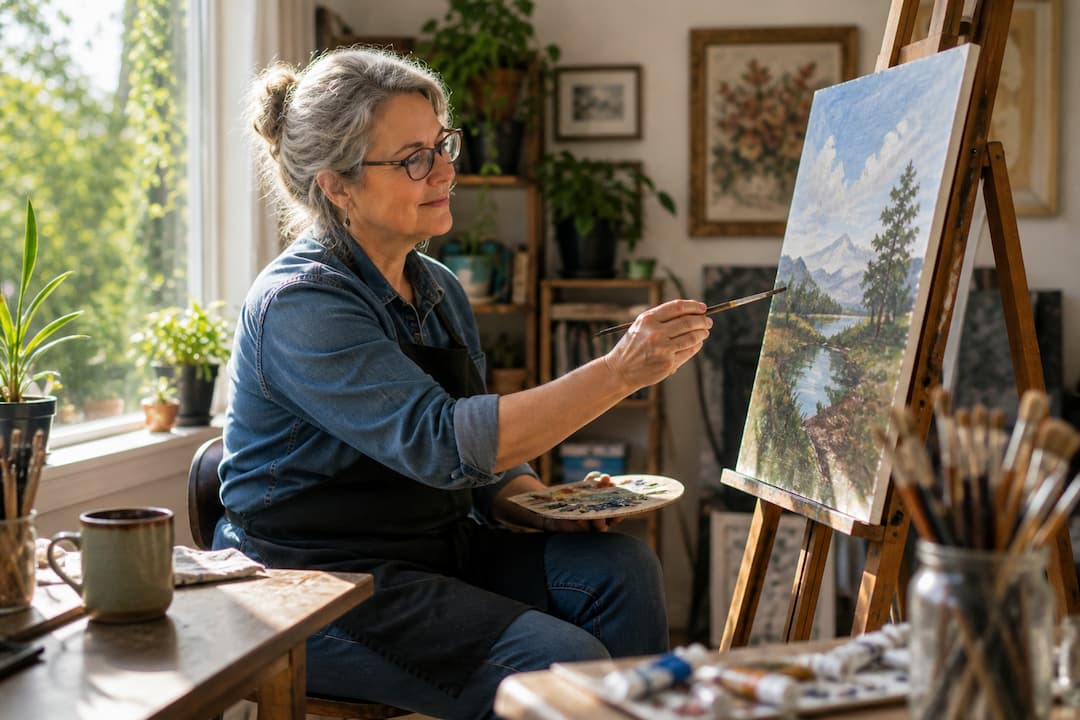
There can be a profound difference between living a life organized entirely around getting rid of pain and building a life that still contains things worth doing while pain is present.
That is also why distraction shouldn’t always be dismissed as avoidance. Becoming absorbed in a film, conversation, hobby or creative activity may simply allow pain to occupy less attention for a while. We don’t have to stare continuously at something painful to prove that we’re dealing with it responsibly.
The objective of modern pain management is often broader than lowering a number on a pain scale. Interdisciplinary approaches can focus on restoring physical, psychological and social functioning because the consequences of chronic pain extend into all three. International Association for the Study of Pain: Chronic Pain and Multidisciplinary Treatment
Maybe the pain hasn’t become less real.
Maybe more of life has become real again too.
And Then There Are the Bad Days
Any article about learning to live with persistent pain risks becoming dishonest if it turns adaptation into a triumph story.
There are still bad days.
Sometimes there are horrible days.
A flare-up can disrupt carefully built routines and make all the coping strategies that usually help feel inadequate. Someone who is normally active may spend much of the day lying down. Plans may have to be cancelled. Mood can fall quickly. Fear can return. Frustration can return. The person may wonder why they’re struggling so much with something they thought they had learned to manage.
But having a difficult response to a difficult day isn’t evidence that all the learning disappeared.
We seem to understand this easily in other parts of life. Someone can be an experienced sailor without being able to calm the ocean. Skill doesn’t prevent storms.
Pain management is similar.
Sometimes managing a flare-up means doing less, changing plans, using whatever treatments have been recommended and waiting for the body to settle. Sometimes the useful question isn’t, How do I defeat this today?
It may be:
How do I get myself through today without making an already difficult experience harder than it has to be?
There can be considerable kindness in that question.
Pain Can Become Lonely
One difficulty with persistent pain is that much of it happens invisibly.
Other people see the declined invitation, not the calculation behind it.
They see someone sitting down, not what standing feels like.
They see a person who looked fine yesterday and wonder why today is different.
When pain continues for years, even caring people may struggle to understand why it hasn’t been fixed. The person experiencing it may eventually grow tired of explaining.
Social life itself can become logistical.
Will there be chairs? How far away is the parking? How much walking is involved? Can I leave early? Will I be able to take medication? What happens if I have to cancel at the last minute? Am I going to disappoint people again?
After enough difficult experiences, staying home can begin looking easier.
Unfortunately, isolation can remove exactly the kinds of things that help protect mental wellbeing: companionship, belonging, laughter, purpose and the feeling that we still participate in the world.
The Value of People Who Understand
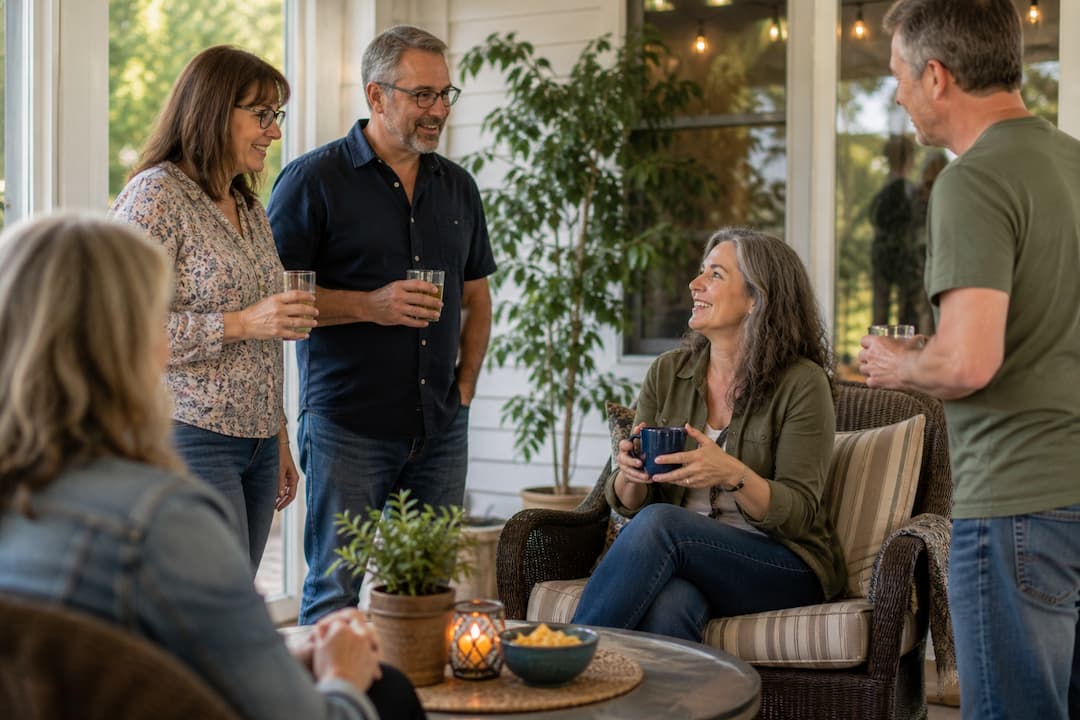
This may help explain why pain-management groups can matter so much.
My friend participates in support and pain-management programs regularly. I don’t know everything she learns or does there, and I don’t need to. What I’ve picked up over time is that managing chronic pain isn’t treated as one simple problem with one simple solution.
Support can include physical strategies, pacing, psychological approaches, education, sleep, activity management and learning from other people who understand what living with persistent pain actually involves.
There’s something powerful about not having to explain everything.
Peer support works partly because another person can say, in effect, I know what you’re talking about, and mean it from experience. I’ve seen the value of that repeatedly in mental health work as well. Shared experience doesn’t replace professional care, but it can relieve the isolation of believing nobody else understands.
If pain or another illness has significantly changed someone’s life, my earlier article about coping with a life-altering health diagnosis also explores the grief, emotional adjustment and need for support that can accompany major changes in health. The details may differ, but there is often real grief involved in adapting to a body that no longer allows us to live exactly as we once did.
Mental Health Support Doesn’t Mean the Pain Isn’t Real
This deserves to be said plainly.
Getting psychological help for chronic pain does not mean the pain is psychological or imaginary.
A person doesn’t have to choose between believing that their body hurts and recognizing that hurting for months or years affects their mind.
Both can be true.
Pain psychology exists precisely because living with persistent pain is emotionally demanding. Psychological approaches may help someone manage fear, frustration, low mood, difficult thoughts, activity avoidance or the enormous effort involved in adjusting to something they cannot simply switch off. They are part of treating the person living with pain, not evidence against the reality of the pain.
The same is true of support groups.
Sometimes treatment is about reducing symptoms. Sometimes it is about increasing function. Sometimes it is about preventing life from becoming smaller. Often it is some combination of all three.

Making Life Bigger Than Pain
So what actually changes when someone has lived with pain for years and somehow seems better able to carry it?
Maybe there isn’t one answer.
Perhaps they know their body better.
They’ve learned which pain means stop and which discomfort they can tolerate. They’ve learned what makes tomorrow harder. They may have found treatments that help. They’ve adjusted their environment. They’ve discovered how to pace themselves. They know that flare-ups come and, often, that flare-ups eventually go.
Maybe they’ve also stopped waiting for the perfect pain-free day before allowing life to happen.
There is grief in that process. There may be things a person genuinely cannot do anymore, and pretending otherwise would be cruel. Chronic illness and chronic pain can take things away. Sometimes important things.
But adaptation can also be creative.
Maybe the garden changes.
Maybe travel changes.
Maybe work changes.
Maybe an hour with friends replaces an entire evening.
Maybe the person who used to walk ten kilometres now celebrates walking around the block.
Maybe they discover something entirely new because the old way is no longer available.
None of those adjustments mean the loss wasn’t real.
They mean life continued changing around it.
I think this is what I’ve sometimes been seeing when someone appears less affected by chronic pain after living with it for years. It isn’t necessarily that they’ve become tougher than somebody who is struggling. It isn’t that they’ve mastered positive thinking. And it certainly isn’t proof that their pain wasn’t as bad as they said it was.
They may simply have accumulated years of knowledge about how to live in the body they have.
There will still be days when pain takes centre stage.
There will still be cancelled plans, frustration, exhaustion and moments when acceptance feels impossible.
But perhaps pain gradually loses one thing.
Not necessarily its intensity.
Its authority.
It doesn’t automatically get to make every decision anymore.
And perhaps that’s one of the most realistic forms of hope available when pain itself doesn’t go away.
We don’t always get to make the pain smaller.
Sometimes, little by little, we learn how to make life around it bigger.