
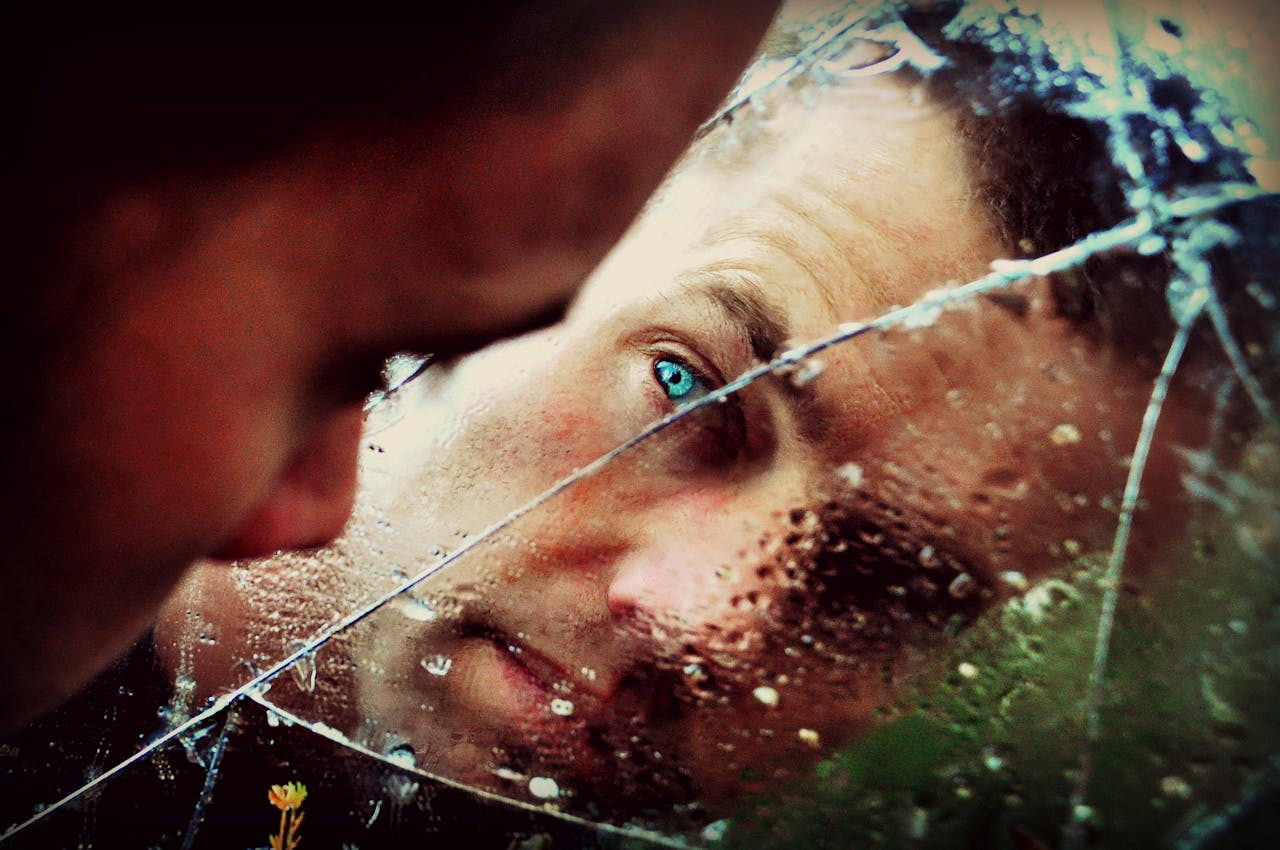
There is a particular kind of quiet that has nothing to do with sound. You can be sitting in a coffee shop full of people, scrolling through a feed full of faces, or living in a city of millions — and still feel it. That low, persistent hum of not quite belonging anywhere. Of being present but unseen. Of going through the motions of a connected life while something essential feels missing.
Most of us know that feeling. We just don’t talk about it much.
Loneliness has a way of convincing us it’s personal — a reflection of something lacking in us rather than something missing around us. But the truth is that isolation is one of the defining experiences of modern life, and it touches people across every age, background, and circumstance. You don’t need a diagnosis or a crisis to feel it. You just need to be human in a world that has quietly made it harder and harder to actually reach each other.
This article is for anyone who recognizes that ache — whether you’re navigating a life transition, managing a mental health condition, or simply noticing that somewhere along the way, your sense of community got thin. Wherever you’re starting from, there is a way through. And it begins, almost always, with one small move toward other people.
Loneliness Is More Common Than You Think
If you’ve ever felt embarrassed by how alone you feel, the first thing worth knowing is this: you are in very large company.
Loneliness has been described by researchers as a growing public health concern across North America and much of the developed world. It isn’t a condition that affects only the elderly or the isolated — it shows up in young professionals working remotely from studio apartments, in parents whose children have left home, in people who have recently divorced or moved to a new city, in retirees who’ve lost the daily rhythm of a workplace, in anyone who has come through a significant loss and found the world somehow smaller on the other side.
Modern life has a paradox built into it. We have more ways to communicate than any generation in history, and yet genuine, sustained human contact — the kind where someone actually knows you, where you don’t have to explain your context from scratch — has become harder to find and harder to keep. We are busier, more mobile, more digitally saturated, and in many ways more anonymous than ever before.
The result is that a lot of people are quietly going it alone who never intended to. Not because something is wrong with them. Because the structures that used to create community naturally — neighbourhoods, faith communities, long-term workplaces, extended family nearby — have loosened, and nothing has quite replaced them yet.

Connection Is a Human Need, Not a Luxury
Somewhere along the way, many of us absorbed the idea that needing other people is a kind of weakness. That the truly strong, truly capable person handles things independently. That asking for company, for belonging, for someone to simply be present with — is somehow asking for too much.
It isn’t. And the evidence is unambiguous.
Human beings are among the most social species on the planet. We are not built for solitary survival — we are built for cooperation, for relationship, for the kind of meaning that only comes from being known by others. Our nervous systems are literally calibrated to co-regulate with other people. When we are in the presence of someone safe, our stress responses settle. When we feel seen, something in us relaxes that can’t relax any other way.
Needing connection isn’t a character flaw or a sign of emotional immaturity. It’s biology. It’s wisdom. And recognizing that need — and doing something about it — is one of the most honest and courageous things a person can do.
What Isolation Does to Us Over Time
Loneliness isn’t just uncomfortable. Given enough time, it starts to change things.
Research has consistently shown that chronic isolation affects us on multiple levels simultaneously. It disrupts sleep. It increases inflammation in the body. It heightens our threat response, meaning we become more likely to interpret neutral situations as dangerous or hostile — which in turn makes it harder to trust people enough to let them in. It erodes concentration and memory. It amplifies the inner critic, because there are no outside voices coming in to offer a different perspective or simply remind us that we are more than our worst thoughts about ourselves.
For people who begin from a place of reasonable mental health, prolonged loneliness can quietly become a pathway into anxiety and depression. Not because they were destined for it, but because isolation is genuinely hard on the human system, and the human system will eventually show the strain.
This isn’t meant to frighten anyone. It’s meant to take the experience seriously. Loneliness is not a trivial inconvenience to push through — it’s a signal worth listening to, and responding to, before it compounds into something heavier.
What Connection Can Actually Do for Us
The other side of that picture is just as real, and considerably more hopeful.
Connection heals. Not metaphorically — actually. Studies on social support consistently show that people with meaningful relationships recover faster from illness, manage stress more effectively, and report significantly higher levels of wellbeing and life satisfaction. Feeling genuinely understood by even one other person can quiet some of the loudest, harshest voices in our heads. Being around people who share our experiences — who don’t need everything explained, who get it — reduces shame and isolation in ways that nothing else quite replicates.
And it doesn’t require grand gestures or deep intimacy to start working. Research on belonging suggests that it’s built not through single transformative moments but through small, repeated acts of human contact over time. Showing up to the same place week after week. Recognizing a face and being recognized in return. A brief conversation that goes slightly beyond the surface. These small accumulations are what gradually produce the feeling of being somewhere that’s yours, and someone who belongs.
You don’t need to find your people all at once. You just need to start showing up somewhere.

It Takes Courage — And That’s Okay
Let’s be honest about something, because it deserves to be said plainly.
For many people, reaching out doesn’t feel easy or natural. If you’ve been hurt before — by relationships that ended badly, by communities that didn’t hold you, by the experience of showing up and still somehow feeling invisible — the idea of trying again can feel more exhausting than hopeful. If anxiety or depression is part of your life, the activation energy required just to walk into a room of unfamiliar people can feel genuinely enormous. If you’ve been alone for a long time, you may have quietly constructed a life that works around the absence of connection, and the thought of disrupting that equilibrium is unsettling in its own way.
All of that is real, and none of it means you’re broken or that connection isn’t available to you.
It means that for you, this takes courage. And courage doesn’t mean not being afraid — it means doing the small thing anyway, in spite of the fear. You don’t have to walk into the biggest, loudest room. You don’t have to be ready. You just have to be willing to take one small step in the direction of other people, and see what happens.
Simple Ways Anyone Can Start Connecting
The good news is that entry points exist at every level of comfort and capacity — you don’t need to overhaul your life to begin.
Local Events and Community Calendars
Most cities and towns have more going on than their residents realize. Farmers markets, community festivals, art walks, free outdoor concerts, neighbourhood association meetings, library events, open mic nights — these are places where ordinary life happens alongside other people, with no expectations and no pressure to explain yourself. Local community blogs and event listing websites are worth bookmarking; in most urban areas they publish weekly roundups of what’s happening nearby. Showing up somewhere even once puts you in physical proximity to other humans, which is always the first step.
Meetup Groups — Walking In With Something in Common
Meetup.com is worth knowing about if you don’t already. It hosts thousands of local groups organized entirely around shared interests — hiking, board games, language exchange, photography, book clubs, film discussion, creative writing, and far more niche things than any of those. The particular value of interest-based groups is that you walk in already having something in common with everyone else in the room. You don’t need to introduce yourself and hope for chemistry — you can just talk about the thing you both showed up for, and let connection grow naturally from there.
Volunteering — Connection With a Purpose
Volunteering is one of the most underrated pathways to community. It puts you in regular contact with people who share at least one value — the desire to contribute to something — and it gives every interaction a natural focus and purpose. For people who find unstructured socializing difficult, having a role to fill and a task to do can make the whole thing considerably less fraught. And the research on volunteering and wellbeing is remarkably consistent: giving time tends to give something back.
For Those Living With Mental Health Challenges
Everything in this article so far applies equally to anyone, regardless of mental health history. But if you’re living with depression, anxiety, bipolar disorder, psychosis, or another condition, isolation tends to hit differently — and there are spaces and programs specifically designed with you in mind. You deserve to know they exist.
Mental Health Clubhouses — A Community Built for Recovery
Mental health clubhouses are community spaces — found across North America and in many countries worldwide — where adults living with mental illness can come together to socialize, share meals, participate in activities, and support one another. They operate on a psychosocial rehabilitation model, which means the focus is on strengths, participation, and community rather than symptoms and clinical management. Members are never defined by their diagnosis. You come as you are, contribute at whatever level feels right, and gradually become part of something.
Clubhouses are typically referral-based — you access one through a doctor, psychiatrist, or mental health team. If you’re not currently connected to a mental health team, your family doctor or a walk-in clinic can often get the referral process started. To find what’s available in your area, searching your regional or local health authority’s website for “mental health clubhouse” is a good starting point, as is asking any mental health professional you’re already in contact with.
Peer Support Programs — Learning from People Who’ve Been There
Peer support programs connect people living with mental health challenges with others who have navigated similar experiences — not as therapists or clinicians, but as fellow human beings who understand from the inside. There is something uniquely powerful about being in a room, or on a call, with someone who has been where you are and come through it. It disrupts the isolation of feeling like your experience is too strange or too heavy for ordinary company. Many community mental health organizations, hospitals, and nonprofits run peer support programs, and they’re worth seeking out specifically.
Facilitated Group Programs
Many mental health organizations offer structured group programs — skills-building groups, wellness groups, psychoeducational groups — that combine the benefits of learning with the experience of being in community with others who get it. These are different from therapy groups in that they’re often more accessible, lower in intensity, and open to a broader range of people. Your local Canadian Mental Health Association branch, or equivalent organization in your country, is usually a good place to start looking.
How to Find What’s Available Near You
The simplest starting points: ask your doctor or mental health team directly what community programs exist in your area. Search your regional health authority’s website. In Canada, the CMHA (Canadian Mental Health Association) has branches across the country and maintains resource listings. In the United States, NAMI (National Alliance on Mental Illness) offers similar navigation support.
Online Connection Is Real Connection
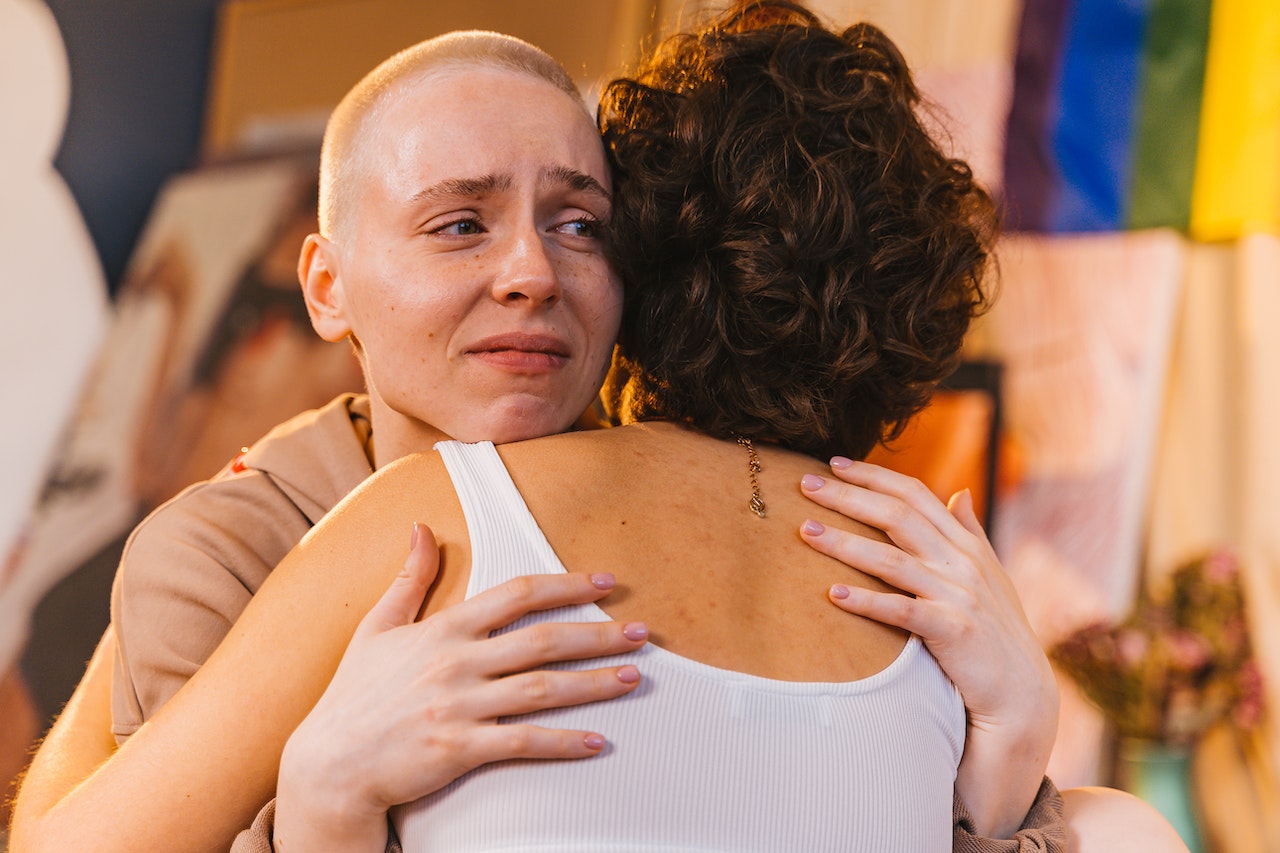
For anyone who finds in-person socializing difficult — whether because of anxiety, physical health, geography, limited energy, or simply where they’re at on a given day — online community is not a lesser option. It is a genuine form of human contact, and for many people it has been the bridge that eventually made in-person connection feel possible.
Peer Support Forums and Communities
Online peer support communities exist for virtually every mental health experience imaginable. Forums, Reddit communities, and dedicated platforms like 7 Cups offer spaces where people can share honestly, be heard, and hear others — often with a degree of anonymity that makes it easier to be truthful than in face-to-face settings. These communities can be particularly valuable for people whose experiences feel isolating or hard to explain to those who haven’t lived them.
Social and Interest-Based Groups Online
Facebook Groups, Discord servers, and similar platforms host thousands of communities organized around shared interests, identities, and experiences. The quality varies, but many are genuinely warm, consistent spaces where real relationships develop over time. The same principle that makes in-person interest groups accessible applies here — you walk in with something already in common.
Zoom and Video-Based Groups
Facilitated groups that meet via video call have become increasingly common since 2020 and have proven remarkably effective. Many peer support organizations, mental health nonprofits, and community groups now offer regular Zoom-based programming — drop-in groups, themed discussions, skills workshops — that are accessible from anywhere with an internet connection. For people managing limited mobility, social anxiety, or geographic isolation, these can be genuinely life-changing.
What You Bring to Others
There’s something that tends to go unsaid in conversations about loneliness and community, and it’s worth saying directly.
When you show up — to a clubhouse, a Meetup group, a volunteer shift, an online forum, a weekly Zoom call — you are not only receiving. You are giving. Your presence matters to the people around you in ways you may never fully see. The person who has been coming to a group for two years notices the new face and smiles, and that smile lands somewhere. The quiet member who finally says something in the group chat and gets a warm response feels something shift. The volunteer who shows up consistently becomes part of the texture of a place, and other people feel steadier because of it.
Your lived experience — including the hard parts, especially the hard parts — carries a kind of understanding that no amount of training or education can replicate. Someone in that room, in that forum, in that group, is quietly hoping to encounter a person who gets it. You may be that person for them without ever knowing it.
You are not just someone who needs community. You are also someone who helps create it.
You Deserve to Belong Right Now
Not when you’re feeling better. Not when you’ve got more energy, more confidence, a cleaner apartment, a clearer head. Not after the next hurdle or the next improvement or the next version of yourself that feels more presentable to the world.
Now. As you are.
The spaces we’ve talked about in this article — clubhouses and peer programs, community events and interest groups, online forums and video calls — were not built for people who have it together. They were built for people who are still finding their way, which is most of us, most of the time. The price of admission is simply showing up. That’s it. That’s all.
You were never meant to carry this alone. And you don’t have to.

Conclusion
Loneliness is not a personal failing, and it is not a permanent condition. It is a signal — one that points toward something real that every human being needs and deserves: to be known, to belong somewhere, to matter to someone.
The path back to that isn’t always easy, and it rarely happens all at once. But it starts with one small move — looking up a local event, asking a doctor about a clubhouse referral, joining an online group, saying yes to something you might ordinarily decline. Small steps, taken consistently, in the direction of other people.
If something in this article resonated with you, we’d love to hear about it in the comments. And if you’re looking for more on resilience, wellbeing, and navigating life’s harder passages, explore the rest of what we’ve gathered here.
You don’t have to be alone anymore.